
A three-minute break does not sound like much of a workplace strategy. But after several years of experimenting with how to help busy people take better care of themselves, I’ve come to believe that small breaks can play a surprisingly important role in helping people—and teams—perform at their best.
AdaRose didn’t actually start as a workplace company. We started by trying to help busy, overwhelmed individuals take better care of themselves during the day.
The problem was that the people who needed breaks the most were often the least likely to take them. They powered through lunch, sat through back-to-back meetings, stayed glued to their screens, and generally put everything and everyone else ahead of themselves.
Then we started offering breaks to groups of people at companies, and something changed.
People participated. They came back. And they told us the experience made a difference.
Among participants*:
- 75% said they felt more energized.
- 63% felt more motivated and engaged at work.
- 63% said the program helped them manage stress.
- 75% felt more connected to their team.
*Self-reported data from recent AdaRose programs.
Why were people suddenly doing something at work that they had struggled to do on their own?
We’ve come to believe there are two big reasons. First, their employer had essentially given them permission to take a break. Stepping away for a few minutes wasn’t something to feel guilty about or squeeze in secretly. It was part of the workday.
Second, other people were doing it too.
Those two insights fundamentally changed the way we think about what we are building here.
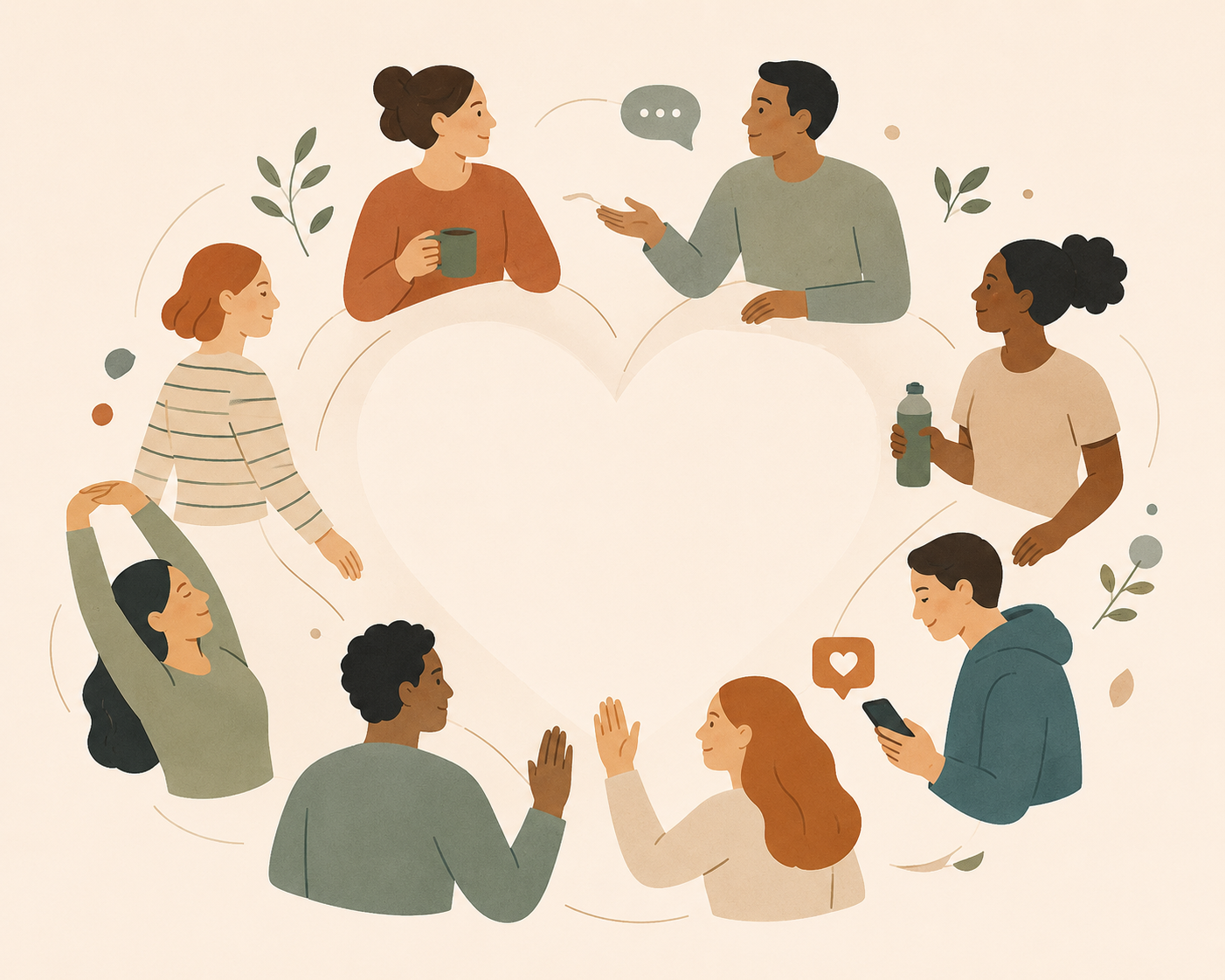
Community is wellness
We tend to think of healthy behaviors as individual choices: I should exercise. I should manage my stress. I should get away from my screen.
But humans are profoundly social creatures, and many of the behaviors we think of as individual are heavily influenced by the people around us.
We’ve seen that firsthand. When people participate in a program designed for a team atmosphere, they share photos, compare experiences, encourage one another, laugh, and learn things about people they work with.
That social layer makes the healthy behavior itself more compelling. Instead of becoming another item on a self-improvement checklist, taking a break becomes something people are doing together.
It also strengthens relationships among people who need to work together. One participant shared that AdaRose helped them “stay connected to the team, especially in remote/hybrid environments.”
One of our core learnings has been that community is wellness. Increasingly, we also see connection as part of the infrastructure for performance.
The breaks are small by design
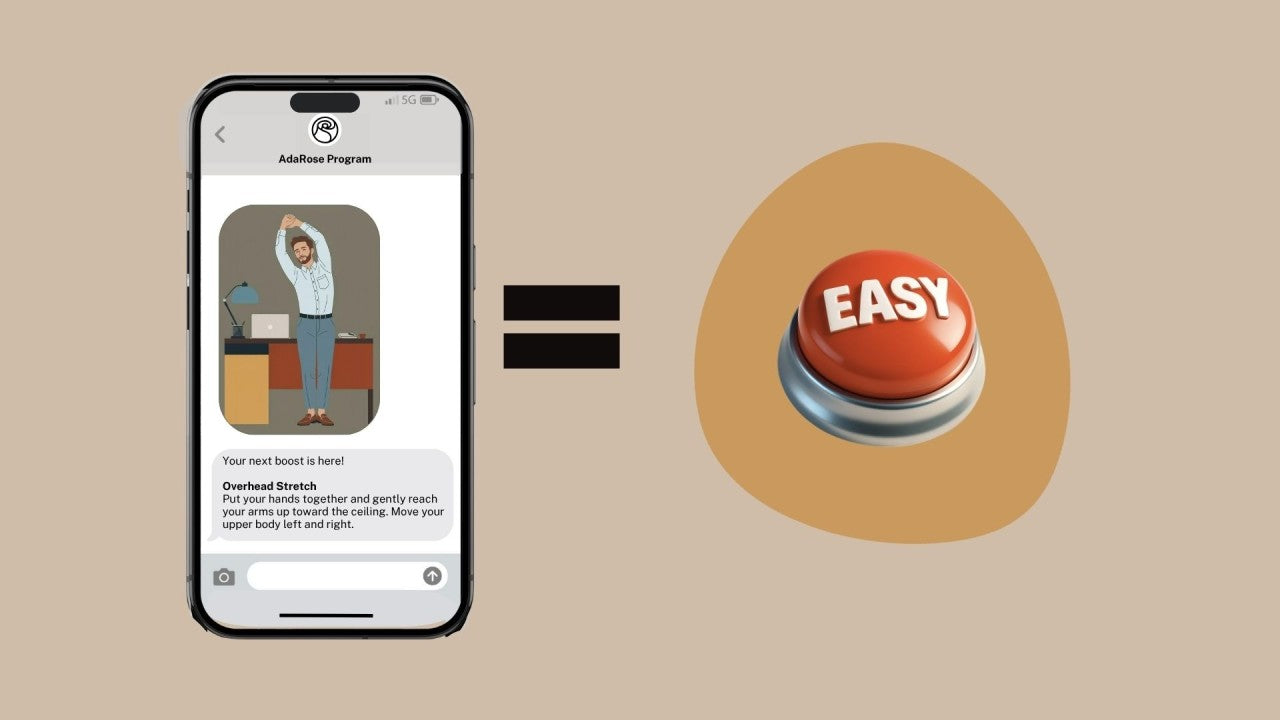
Working with behavior change experts, we’ve tried to identify the smallest meaningful action we can realistically insert into a busy person’s day: the minimum viable break. We call them Boosts.
A Boost might ask someone to stretch, step outside, put their phone away, take a few slow breaths, notice something around them, or connect with a coworker. Most take between one and five minutes.
That’s short enough to fit between meetings or another transition in the day, but long enough to interrupt the pattern of powering straight through.
We also work hard to make Boosts easy, relevant, interesting and, ideally, fun. Because if something is technically “good for you” but feels like homework, people won’t keep doing it.
Most people don’t need to be told that moving, managing stress, taking a break from screens, or connecting with other people is good for them. The challenge is creating conditions in which they actually want to do those things—and can realistically fit them into the workday.
The break is only the beginning
No single Boost is going to transform someone’s health or turn a struggling team into a high-performing one. That’s not the point.
The interesting question is what happens when small practices that support focus, energy, resilience, learning, and connection become a normal part of how people work.
A restorative pause can help someone return with a little more energy or perspective. A shared activity can create another point of connection between coworkers. Repeated prompts can make healthy behaviors more familiar. And when an employer actively supports these practices, stepping away from the screen for three minutes can begin to feel less like slacking off and more like part of sustaining yourself to do good work.
Individually, these are tiny changes. Repeated across a team and over time, they can begin to shape workplace culture.
And that’s where the implications become much bigger than wellness.
Human capacity in the AI era
AI is dramatically increasing what individuals and teams can produce—and the speed at which they’re expected to produce it. But faster technology doesn’t automatically give people more attention, better judgment, stronger relationships, greater creativity, or an unlimited capacity to absorb change.
As more routine work becomes automated, much of what remains for people is deeply human and cognitively demanding: making judgments, solving ambiguous problems, learning new skills, adapting to change, collaborating, and figuring out how to use increasingly powerful tools well.
That requires human capacity.
People need space to focus and then reset. They need opportunities to replenish their attention and energy rather than simply depleting them throughout the day. They need to keep learning. And they need strong relationships with the people around them so they can challenge ideas, share knowledge, solve problems, and navigate change together.
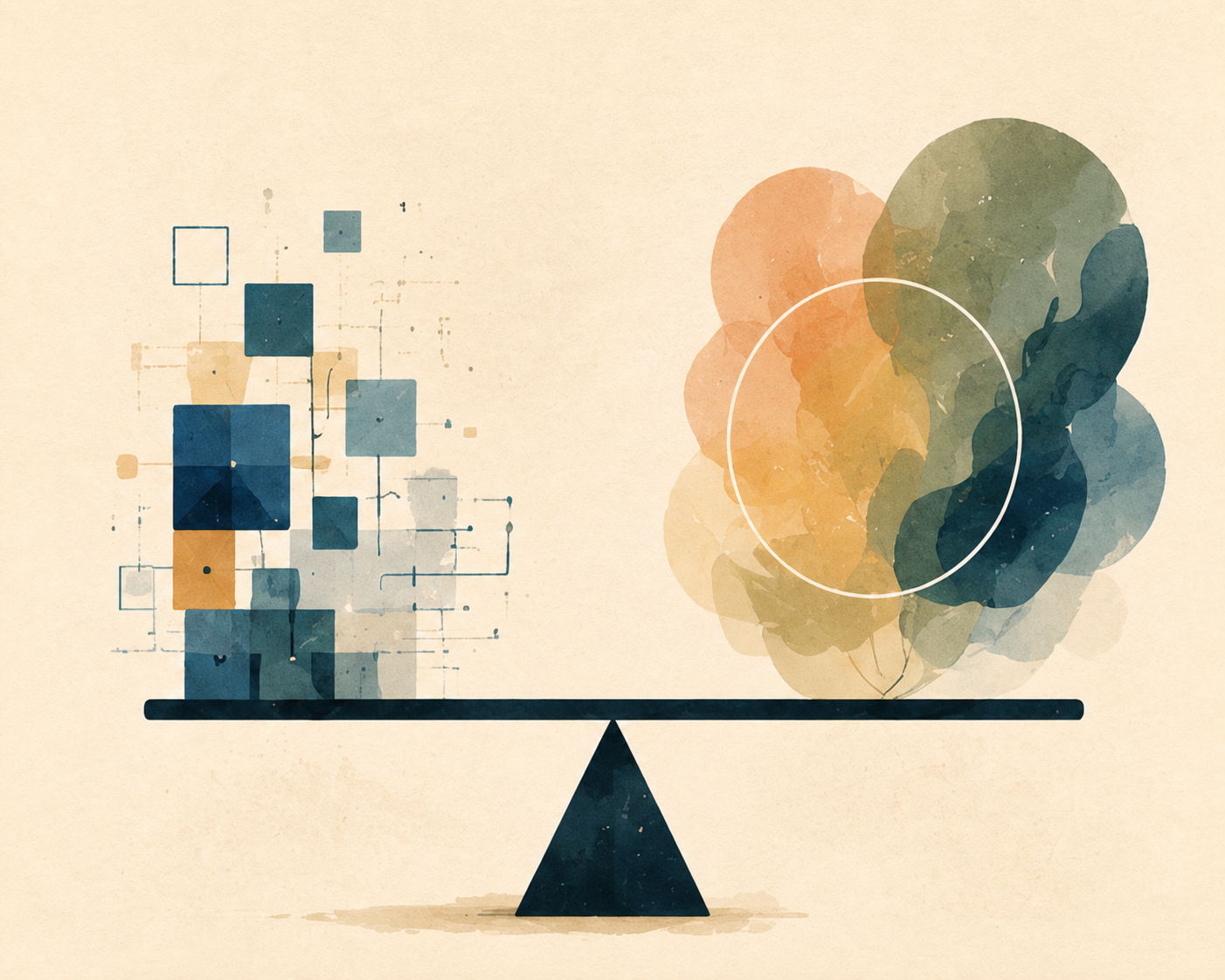
For a long time, workplace wellness and workplace performance have been treated as separate conversations. I increasingly think that’s a false divide.
Helping people sustain their physical, cognitive, and social capacity isn’t something that sits alongside performance. It’s part of what makes sustained performance possible.
That’s why we’re betting on very small breaks.
Not because three minutes is magical, but because the repeated behaviors of everyday work shape culture, and culture shapes people’s capacity to perform.
My bet is that the organizations that learn to build these kinds of practices into everyday work will have an advantage over those that don’t. As technological capability accelerates, human capacity is going to matter more, not less.
Sometimes meaningful change can start with three minutes, a little permission, and the knowledge that you’re not doing it alone.