
Last week at the Global Wellness Summit in Dubai, a single statistic captured my attention, and continues to bother me.
In a report issued by the Global Wellness Institute, the global wellness economy was estimated at an all-time high of $6.8 trillion. This number includes segments such as nutrition, personal care, physical activity, and wellness real estate, many of which recorded dramatic growth surges since the COVID pandemic. Yet workplace wellness—where most adults spend the majority of their waking hours—is estimated at just $53 billion, less than 1% of the total amount.

It could be that the definition of workplace wellness needs an update. Even so, in my experience many companies underestimate the power of workplace wellness, which impacts productivity, retention, and profits. That tiny percentage, even if we were to bump it up a bit, reveals a massive disconnect: We're pouring billions into personal wellness while the place that most affects our wellbeing remains an afterthought.
Not here.
The Real Solution Hiding in Plain Sight
Here's what's become crystal clear to me: most workplace wellness programs are solving the problem in the wrong way.
They're offering meditation apps to lonely employees.
They're providing gym memberships to people who feel disconnected and burned out.
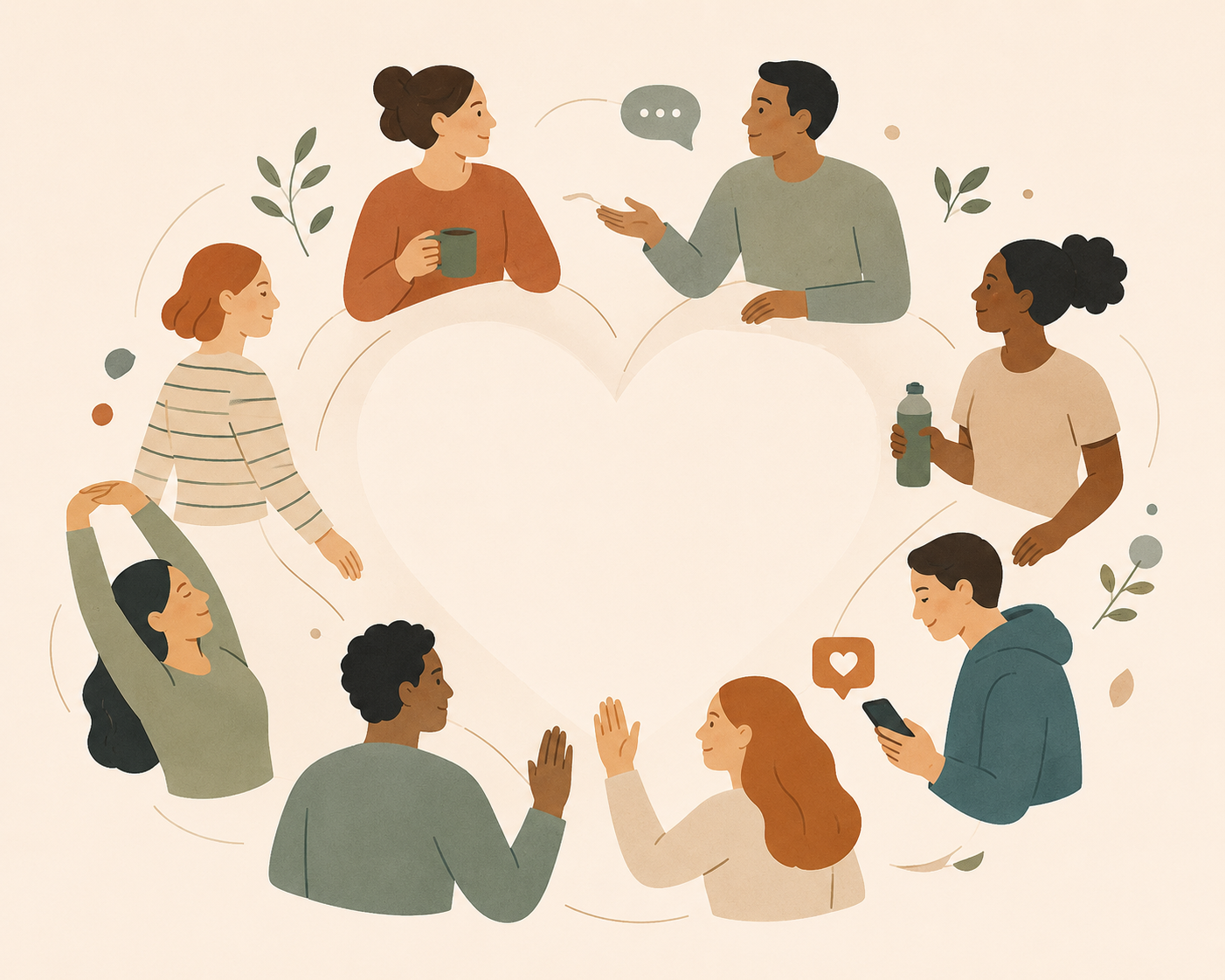
They're pushing individual self-care, when what people desperately need is belonging.
The research is unequivocal: loneliness is now a public health crisis, and it's playing out in our workplaces every day. As one speaker, wellness pioneer Anna Bjurstam put it, “our souls are starving.” Physical, emotional, and spiritual well-being are inseparable. Indeed.
Companies in which employees feel physically well and socially connected outperform the Nasdaq and S&P 500 consistently. Yet we keep treating wellness as an individual sport instead of a team game.
5 Signals That Will Transform Workplace Wellness
Drawing from the perspectives of multiple experts who spoke at the conference, here are some emerging trends that point directly to the future of wellness at work:
1. We're working longer, so healthspan matters more than lifespan
The question isn't how long we'll live—it's how long we'll stay vital, clear, and engaged.
2. Daily behaviors are rewriting our genetic expression
Science now shows that lifestyle choices influence our health more powerfully than we ever imagined. Wellbeing isn't a perk; it's a practice.
3. Connection is (at least!) as important as technology
Technology, including emerging AI tools, provide many benefits—we use them extensively at AdaRose. And yet human relationships remain the strongest predictor of wellbeing. As one speaker put it: "Friends may be the most powerful health intervention." Ideally, we can use technology in service of human connection.
4. Ancient wisdom is becoming evidence-based practice
Breathwork, forest bathing (or time in nature), community rituals aren't fringe practices anymore. They're scientifically validated tools that some forward-thinking companies are building into their cultures.
5. Health has always been social
Your team's habits shape your habits. Their stress becomes your stress. Their energy lifts your energy. We rise or fall together.
And the workplace is one of the few places adults have consistent access to community—even if it's virtual.
The Three Shifts Every Company Must Make
If we're serious about workplace wellness, we need ot make three fundamental shifts:
From individual perks to shared experiences.
Stop offering only benefits that employees use alone. Instead, create opportunities for teams to practice wellness together—building health and connection simultaneously.
From outside of the workday to woven into it.
Employees don't need another app or hour-long webinar. They need micro-moments of restoration built into their existing rhythms. Think two-minute micro-breaks that involve co-workers, not two-hour workshops.
From hoping for connection to designing for it.
Remote and hybrid work aren't going away. Culture can't rely on water cooler conversations anymore. Teams need intentional, joyful touch points—especially during times of organizational change or uncertainty.
The Bottom Line
That 1% figure isn't just a statistic—it's an opportunity.
While the wellness industry continues to grow, workplace wellness remains the most under-tapped sector. Companies that recognize this gap and address the real need—human connection through shared wellness experiences—won't just have healthier teams.
They'll have teams that actually want to show up.
Teams that support each other through challenges.
Teams that celebrate wins together.
Teams that do better work because they're doing wellness together.
The summit in Dubai reminded me that health is so much bigger than healthcare. It's about the environments we create, the connections we foster, and the moments we share.
The question for you isn't whether the way we practice workplace wellness will transform. It's whether your company will help to lead that transformation, or get left behind.
At AdaRose, we're building wellness for teams, not just individuals. Because healthy, connected teams do better work. Want to learn how? Let's talk.